



Club Background
Barrow’s return to the ranks of non-League football coincides with the club’s 125th year anniversary. Founded in July 1901, the club began life in the Lancashire League – yes, what is today known as Cumbria was known as Lancashire back then – and spent the first few seasons moving around different grounds before arriving at its current home on Holker Street in the town in 1909.
The outbreak of the First World War led to the the club understandably stopping playing until the 1919/20 season when it won Division A of the Lancashire Combination the following season and was elected to the Football League. The Bluebirds did not start life in impressive fashion with six straight defeats in their opening six matches with its best finish before the start of the Second World War in 1939 saw them finish eighth in the 1933/34 season. The struggles continued after football recommenced following the conflict although they did reach the third round of the FA Cup in 1954 attracting a crowd of 16,874 to Holker Street for the tie with Swansea Town, the is still the club’s highest-ever attendance.
Following the reorganisation of the League in 1958, Barrow was placed in to Division Four and it took another decade before any success arrived with promotion to Division Three in 1967. Success did not last long though, they were back at the foot of Division Four by the start of the 70s. Back in those days, clubs finishing in the lower reaches of League structure had to be re-elected by their peers and in 1972 they came up against a Hereford United side who had won the Southern League and more importantly achieved national success by beating First Division Newcastle United in the FA Cup – yes, that goal by Ronnie Radford. The first ballot was tied at 26 votes each, but in the second round Barrow managed just 20 votes to Hereford’s 29 and the club lost its Football League status.
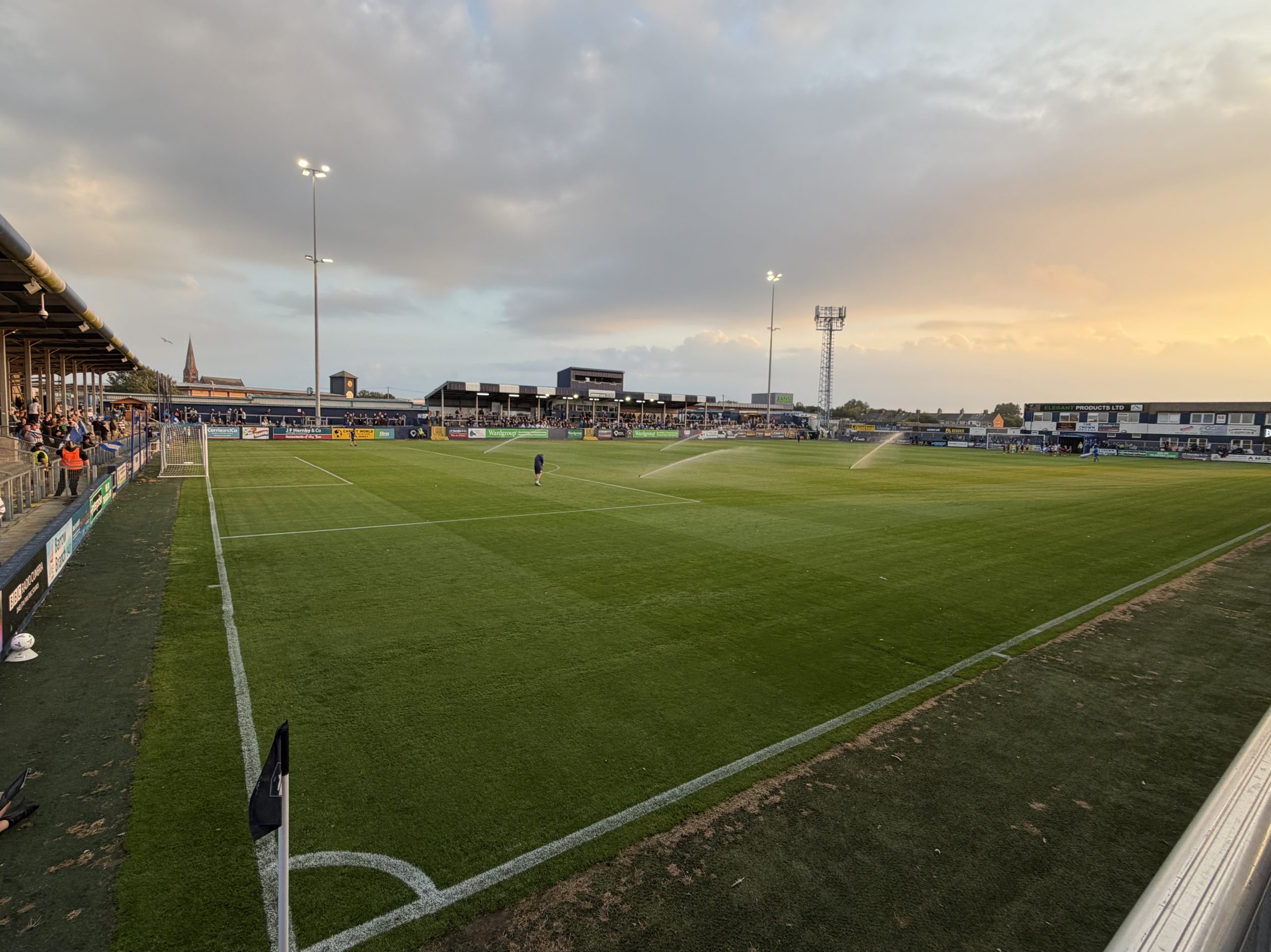
The early days of the non-League era did not herald much more success than the latter ones in the League. The Bluebirds joined Northern Premier League in 1972, but resources were scarce and a home game with South Liverpool in December 1973 was watched by just 143 supporters. In 1979, they joined the Alliance Premier League – what is today’s National League – and beat Yeovil Town 2-0 in their opening game in front of a crowd of more than 2,000. In 1981, they won the knock-out ATS Trophy and in 1983 the Northern Premier League title before a succession of managers including former Manchester United player and latterly assistant to Sir Alex Ferguson, Brian Kidd.
It was 1986 when success truly arrived at Holker Street, a full 85 years after it was first founded. Under the stewardship of Ray Wilkie, the club were promoted out of the Northern Premier League in to the Conference and reached Wembley for the first time in 1990 when they beat Leek Town in the FA Trophy final in 1990. But, you guessed it, failure was not far behind and when Wilkie was taken seriously ill, Barrow were relegated back to regional football and in 1995 they were taken over by Liverpool-based businessman Stephen Vaughan.
To say Vaughan, who died in 2025, was controversial would be an understatement. A boxing promoter who owned a number of football and rugby league clubs, he became the first person to fail the FA’s ‘fit and proper person’ test when he was in charge at Chester in 2009 over his involvement in a £500,000 VAT fraud. His start at Barrow started with success winning the Unibond Premier League title in 1998 before the aforementioned scandal led to Vaughan having to resign as chairman whilst the case of heard. He returned as chairman following the dropping of the case, but left permanently in 1998 and transferred Holker Street in to his company, Vaughan Promotions, in return for his investment. That led to Barrow being removed from the Conference for improper administration and a lengthy dispute ensued during which time the club were readmitted to the Northern Premier League in September 1999. They were only saved by a consortium led by local businessman Brian Keen and reformed as Barrow AFC.
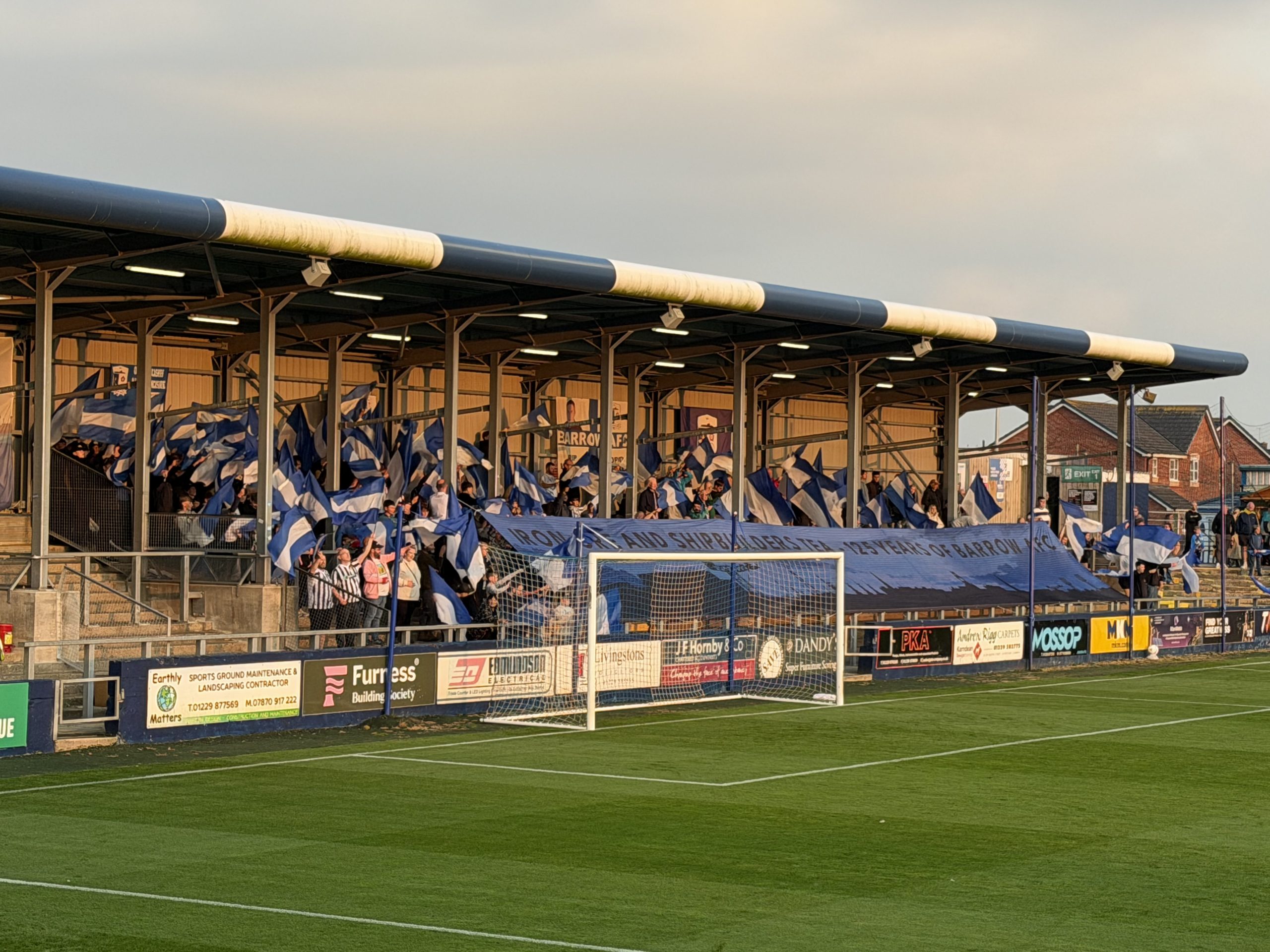
When the Conference North was reformed in 2004/05, Barrow joined the league and it took three years for them to return to the top tier of the non-League structure and they enjoyed another trip to Wembley winning the Trophy in 2009/10. But they were relegated back to regional level in 2012/13 and the following season they were taken over by Barrow-born businessman Paul Casson who bankrolled promotion back in 2015. Casson’s time at the club lasted just three years and the season after his departure the club returned to the Football League during the 2019/20 campaign which was cut short due to the outbreak of the COVID-19 pandemic. The Bluebirds found themselves top of the division from November 2019 and remained there until the suspension before being declared champions on a points-per-game basis and ended their 48-year absence from the League.
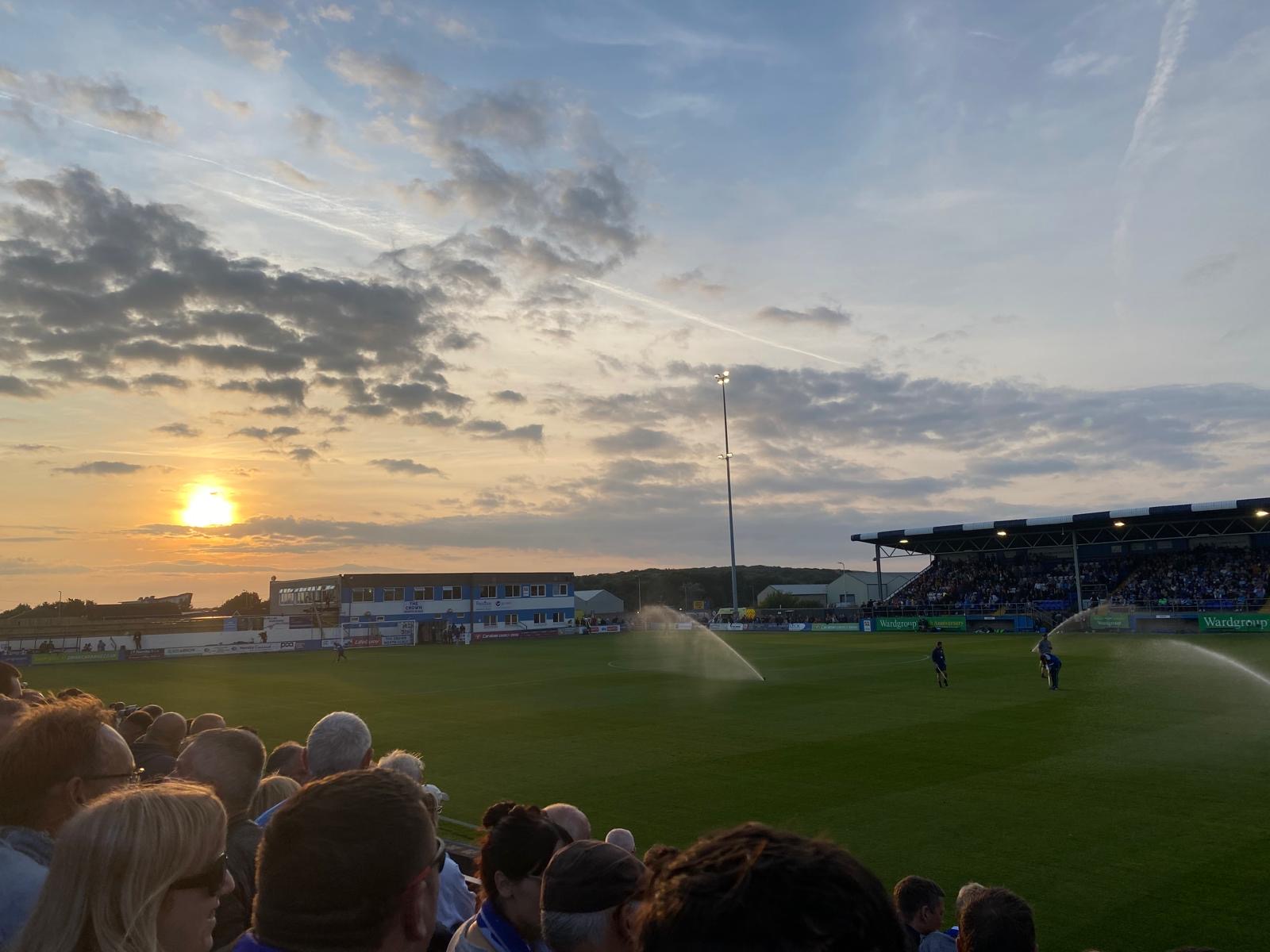
The 2020-21 season was not the glorious return Barrow would have hoped for. First manager Ian Evatt quit to join Bolton Wanderers and then the campaign began behind-closed-doors with fans not returning until December 2020. Evatt’s replacement, former Blackburn Rovers player David Dunn, enjoyed little success and neither did his successor Michael Jolley with the club staring a quick return back to non-League in the face before Dunn’s assistant, Rob Kelly, stepped in to save them. In June 2021, the club appointed Mark Cooper (yes, that one) as manager which did not herald success outside of the first capacity crowd at Holker Street in more than three decades for a Carabao Cup tie with Aston Villa and Cooper left the club in March 2022 – less than a year after joining – and was replaced by experienced boss Phil Brown who managed to sustain League status.
Pete Wild took charge and guided the club to ninth place in League Two in 2022/23 and appeared set for a play-off finish after a stellar period in the second half of the following campaign before a collapse in form saw him exit at the end of the season, replaced by ex-Tottenham Hotspur player Stephen Clemence who only lasted until January 2025 starting a revolving door in the manager’s office. Andy Whing, Neil McDonald, Paul Gallagher, Dino Maamria and latterly a caretaker stint for former Yeovil player, Sam Foley, unsurprisingly led relegation back to non-League.
Following relegation, the club appointed Adam Murray, who had just led Kidderminster Harriers back to the National League Premier Division, as manager.
We’ve Met Before
Previous Results for Yeovil Town First Team vs Barrow
| 18/08/1979 | Away | ALP | L | 0-2 | 2027 | ||
| 16/04/1980 | Home | ALP | L | 0-1 | 1024 | ||
| 16/08/1980 | Home | ALP | W | 2-1 | 1510 | Steve Morrall, Brian Durbin | |
| 28/03/1981 | Away | ALP | L | 1-2 | 419 | Steve Ritchie | |
| 30/01/1982 | Home | ALP | D | 0-0 | 962 | ||
| 27/02/1982 | Away | ALP | L | 1-3 | 513 | David Platt | |
| 11/09/1982 | Away | ALP | L | 1-3 | 463 | Mark Williams | |
| 16/04/1983 | Home | ALP | D | 2-2 | 957 | Andy Bell, Jeremy Brown | |
| 01/09/1984 | Home | GL | L | 1-2 | 1011 | Jeremy Brown | |
| 04/05/1985 | Away | GL | D | 2-2 | 298 | Dave Linney, Phil James | |
| 21/08/1989 | Away | GMVC | L | 1-2 | 973 | Barry Blackman | |
| 24/02/1990 | Home | FAT3 | D | 1-1 | 2535 | Andy Wallace (pen) | |
| 27/02/1990 | Away | FAT3R | L | 1-2 | 1695 | Gary Donnellan | |
| 03/03/1990 | Home | GMVC | D | 2-2 | 1582 | Tiv Lowe, Nicky Dent | |
| 24/11/1990 | Away | GMVC | L | 0-1 | 1134 | ||
| 09/03/1991 | Home | GMVC | L | 0-3 | 2257 | ||
| 17/08/1991 | Home | GMVC | W | 2-0 | 2573 | Mickey Spencer, Robbie Carroll | |
| 25/04/1992 | Away | GMVC | D | 0-0 | 1281 | ||
| 23/01/1999 | Home | NC | W | 1-0 | 2588 | Darren Keeling | |
| 20/02/1999 | Away | NC | L | 0-2 | 1202 | ||
| 17/08/2019 | Away | VNL | L | 0-1 | 1218 | ||
| 28/08/2026 | Away | NL | W | 2-1 | 2286 | Luke McCormick pen, Joe Gubbins | |
Club Statistics
RECENT RESULTS
| 08/08/2026 | Hartlepool United | A | NLP | L | 0-2 | 5830 | ||
| 15/08/2026 | Hornchurch | H | NLP | L | 1-2 | 2388 | Cameron pen 76 | |
| 22/08/2026 | Harrogate Town | A | NLP | D | 2-2 | 2525 | Heffernan o.g. 35, Cameron 90+6 | |
LEAGUE ATTENDANCE STATISTICS
Highest League Attendance: 2388
Lowest League Attendance: 2388
Average League Attendance: 2388
CURRENT SEQUENCE STATISTICS
| Games Without A Win: | 3 | Games Without A Home Win: | 1 | |
| Games Without An Away Win: | 2 | Games Without Defeat: | 1 | |
| Games Without A Home Defeat: | 0 | Games Without An Away Defeat: | 1 | |
| Games Without A Draw: | 0 | Games Without A Score Draw: | 0 | |
| Games Without A No-Score Draw: | 3 | Games Without Scoring: | 0 | |
| Games Without Conceding: | 0 | Home Results Sequence: | L | |
| Away Results Sequence: | LD | Overall Results Sequence: | LLD |
Club Information
Address: Wilkie Road, Barrow-in-Furness, Cumbria, LA14 5UW (click for map)
Telephone: 01229 666010
Email: office@barrowafc.com
Chairman: Paul Hornby
Chief Executive Officer: Iain Wood
General Manager: Rickie Wallbank
Retail and Ticket Office Manager: Dave Pointer
Safeguarding Officer: Emmanuel Francis-Thompson Allen-Burnett
Operations Assistant/Disability Liaison Officer: Amber Taylor
Manager: Adam Murray
Capacity : 6,500
Seated : 2,249
Away Capacity: 930 (632 seated – Holker Street End)
Surface : Grass
Record Attendance : 16,874 – vs Swansea Town, January 9, 1954
Colours : Blue and white
Nickname : The Bluebirds
Programme : £
Ticketing
Tickets are on sale for our Friday night trip to Barrow on Friday 28th August (7.45pm kick-off – thanks DAZN) – to buy one CLICK HERE.
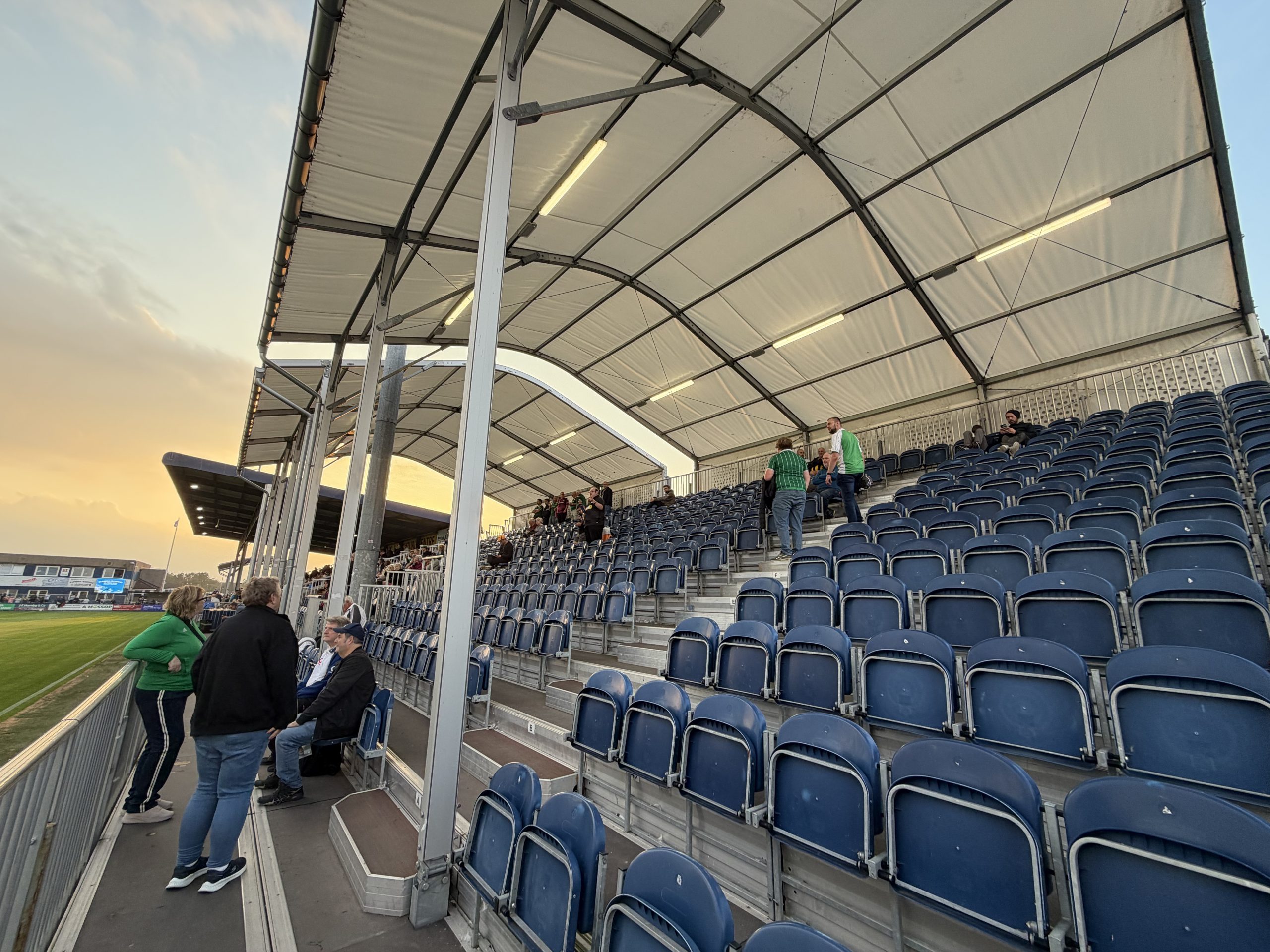
Any dedicated souls who make the long journey from Somerset will at least be afforded a seat for their efforts with Glovers’ fans housed in the Acronis/Hudson Hill Away Stand at Holker Street for this fixture.
Prices:
- Adult – £21.00
- Senior 65+ – £18.00
- 18-21 – £18.00
- 14-17 – £8.00
- 0-13 – £0.00
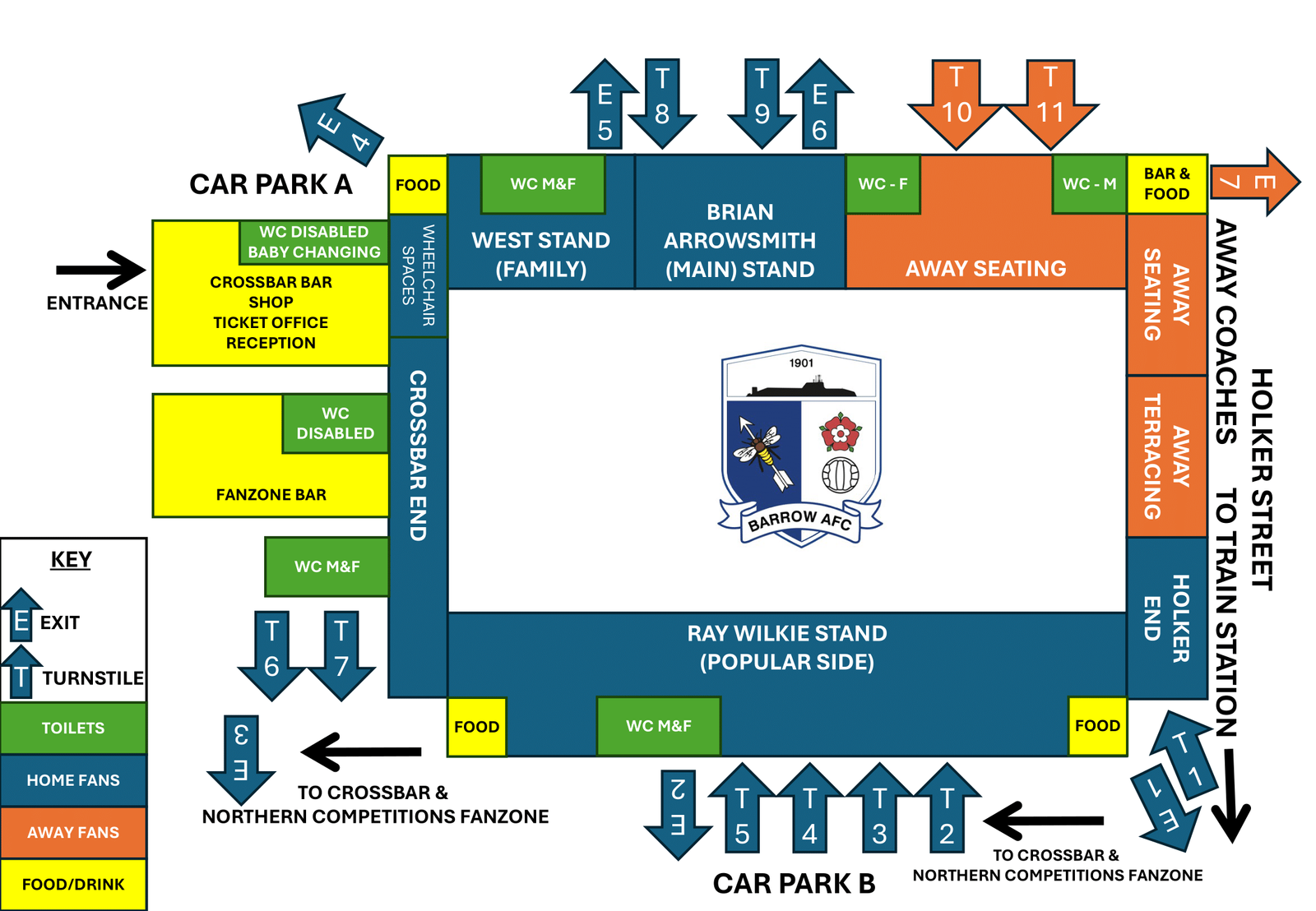
Away supporters will be located in particularly in The Holker Street End (standing), and another seated stand located next to the main stand with an overall capacity of 930, including 632 seated tickets.
In the majority of cases, tickets will be available in advance from your own club, so it is always best to check with them for the latest information.
However, whilst there will be no tickets on the turnstiles on the day of the game, we do have a Ticket Office located near Main Reception which will be open from noon for midweek fixtures.
Official Away Travel
The Green & White Supporters’ Club is running away travel to our Barrow on Friday 28th August, 7.45p.m. kick-off.
Details are as follows:
Members: Adult £41; Concession £39
Non-Members: Adult £44; Concession £42
Coach departs Huish Park: 10am
To book, call Paul Hadlow on 07736 044570. You may be asked to pay a £5 deposit to reserve your seat. Prices are maximum and may reduce depending on booking numbers.
Payment can be made by bank transfer, please reference the match you are booking for and message Paul Hadlow to confirm the payment.
Account name: Green & White Supporters’ Club.
Account number: 8343 6772
Sort code: 20-68-15
Reference: Scunthorpe United
You may be asked to pay a £5 deposit to reserve your seat. No alcohol is allowed on the coach.
Directions To The Ground
General
By Road
At more than 300 miles between Huish Park and Holker Street, the trip to South Cumbria is not quite the longest in the Glovers’ calendar with both Gateshead and Carlisle United taking that title, but it’s still quite a trip. The route is surprisingly simple though, having navigated your way up to the M5, switch to the M6 at Birmingham, and then just keep on going until you hit junction 36 marked Barrow/Kendal and take the A590 all the way to Barrow. You will enter Barrow via Park Road and when you pass the fire station on the right, take the next left into Wilkie Road. The ground is on the right-hand side.
Parking
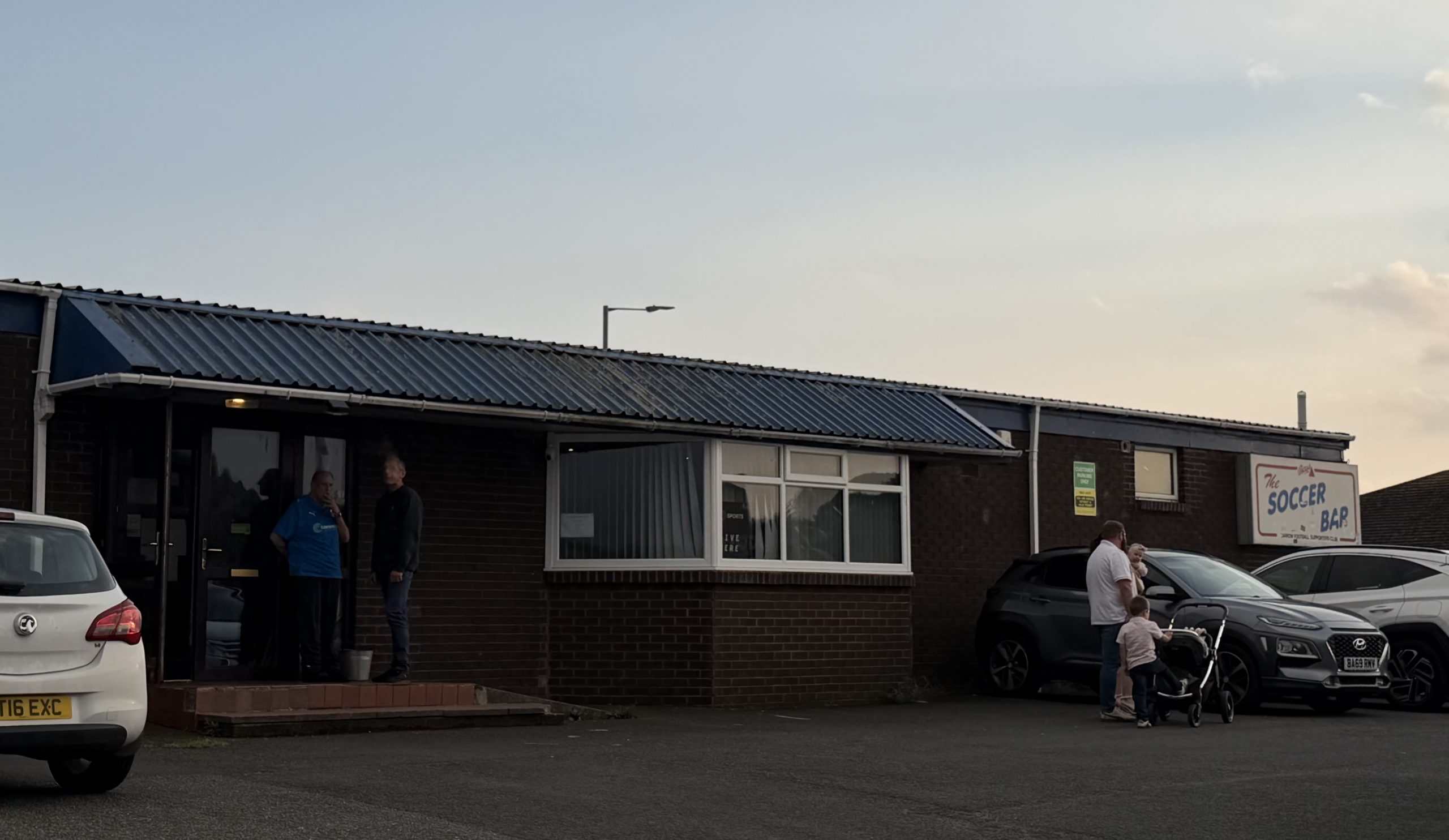
There is no parking at the ground, but the Soccer Bar (LA14 5UQ) – adjacent to Main Reception – offers up to 80 spaces at a cost of £2 per vehicle (cash only) on a first come first served basis on matchdays. There are plenty of streets with on street parking a short walk from the stadium, but be sure to check for restrictions before you park.
There are a number of car parks in Barrow town centre the closest of which is NCP Barrow-in-Furness High Street (LA14 5QR – 28 spaces) and Emlyn Street Car Park (LA14 1QS – 49 spaces).
By Rail
Barrow is one of the easier stadiums to reach from the train station with Barrow-in-Furness being about a 15-minute walk – but the journey up from Yeovil is much longer. Probably the easiest way is to get yourself to Manchester or Preston via CrossCountry or the West Coast Mainline, but either way it’s probably going to be more than eight hours of a trip.
By Bus
The number 3 bus from Ormsgill/Newbarns stops right outside the ground. Ask for the Asda/Holker Street stop, with the adult fare approximately £1.50 from the Town Centre.
By Taxi
| Company | Telephone | Website |
|---|---|---|
| Acacia Taxis | 01229 434343 | Acacia Taxis |
| Appy Cabs | 01229 808080 | Appy Cabs |
| Barra Cabs | 01229 833833 | Barra Cabs |
| Coastal Cars | 01229 445445 | |
| Carefree Travel | 01229 829217 | |
| A1 Taxis | 01229 838383 |
Web Resources
Web Sites
Barrow AFC – Official Site
Bluebirds Trust – Supporters’ Trust
Social Media
@BarrowAFC – X/Twitter
Barrow AFC – Facebook
Barrow AFC – Instagram
Barrow AFC – YouTube
Give Em Beans – a fans’ website available in audio or on YouTube
Barrow AFC Fans Group – Facebook
Barrow AFC Fans Forum – Unofficial fans’ forum
Local Press
North West Evening Mail
BBC Sport – Barrow
Food & Drink
General
Barrow-in-Furness is one of those places that makes you wonder whether your sat-nav has given up halfway through the journey. Perched on the southern tip of Cumbria, surrounded by shipyards, industry and an awful lot of weather, it’s a town best known for building submarines and producing football supporters tough enough to stand behind a goal in a horizontal rainstorm.
It’s not exactly the postcard image of the Lake District, but that’s part of its charm. Holker Street is a proper old-school football ground, the locals are fiercely proud of their club. A long way home if you lose though.
Club Bar
The Crossbar is Barrow’s clubhouse bar at Holker Street and, unusually for many grounds, it is generally welcoming to away supporters on matchdays. Located by the main reception, it serves a range of beers, shows live sport on TV and provides a handy pre-match meeting point without having to trek into town. Away fans are typically allowed in alongside home supporters, giving it a friendly, mixed atmosphere, while the adjacent Soccer Bar on Wilkie Road is another popular option for visiting fans.
Local Pubs
Address: Hawcoat Quarry Brow LA14 4HY. Telephone: (01229) 828137 Facebook Map
Likelihood the Natives Will Understand You: The good news is they’re speaking English. The bad news is they’re speaking Cumbrian which sounds a bit northern and a bit Geordie. Most conversations will be absolutely fine, although the odd local may throw in enough dialect to leave you wondering whether you’ve accidentally crossed into a different country.
Top-Tip: If you’re driving, fill up before you set off. Barrow sits at the end of a long peninsula where every road seems to lead either to a shipyard, the sea or another roundabout. Once you’re there, you’re there. Pack a waterproof, allow more travel time than you think you’ll need and remember: if the weather forecast says “light breeze”, that’s merely a local term for “hold onto your hat”.
Local Amenities: Everything you need is here, but nothing is particularly glamorous; think practical northern town rather than bustling football hotbed. There are plenty of pubs, takeaways and supermarkets nearby, while the Hollywood Park leisure complex offers a cinema, bowling and places to eat if you’ve somehow arrived in Barrow with time to spare.
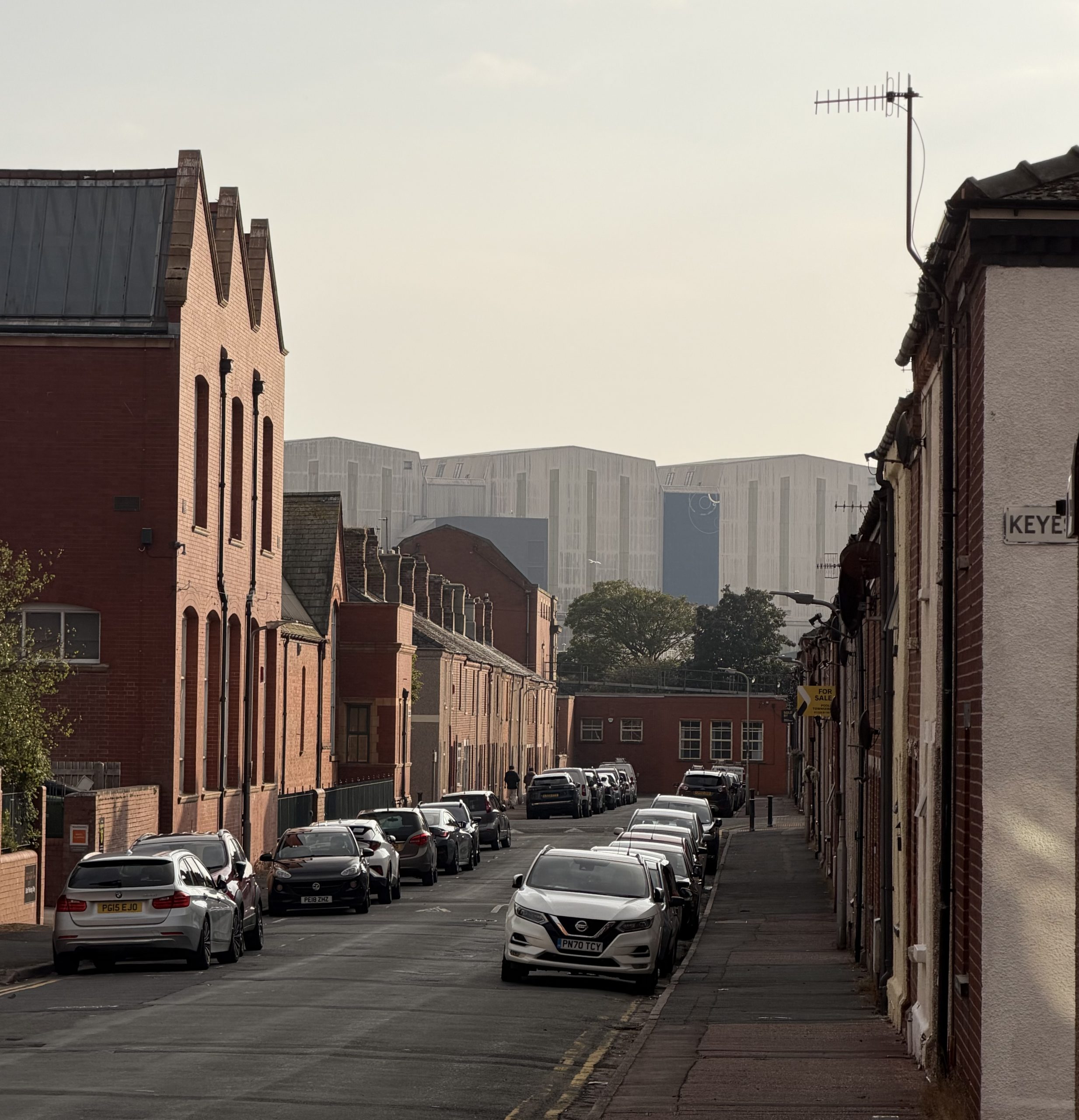
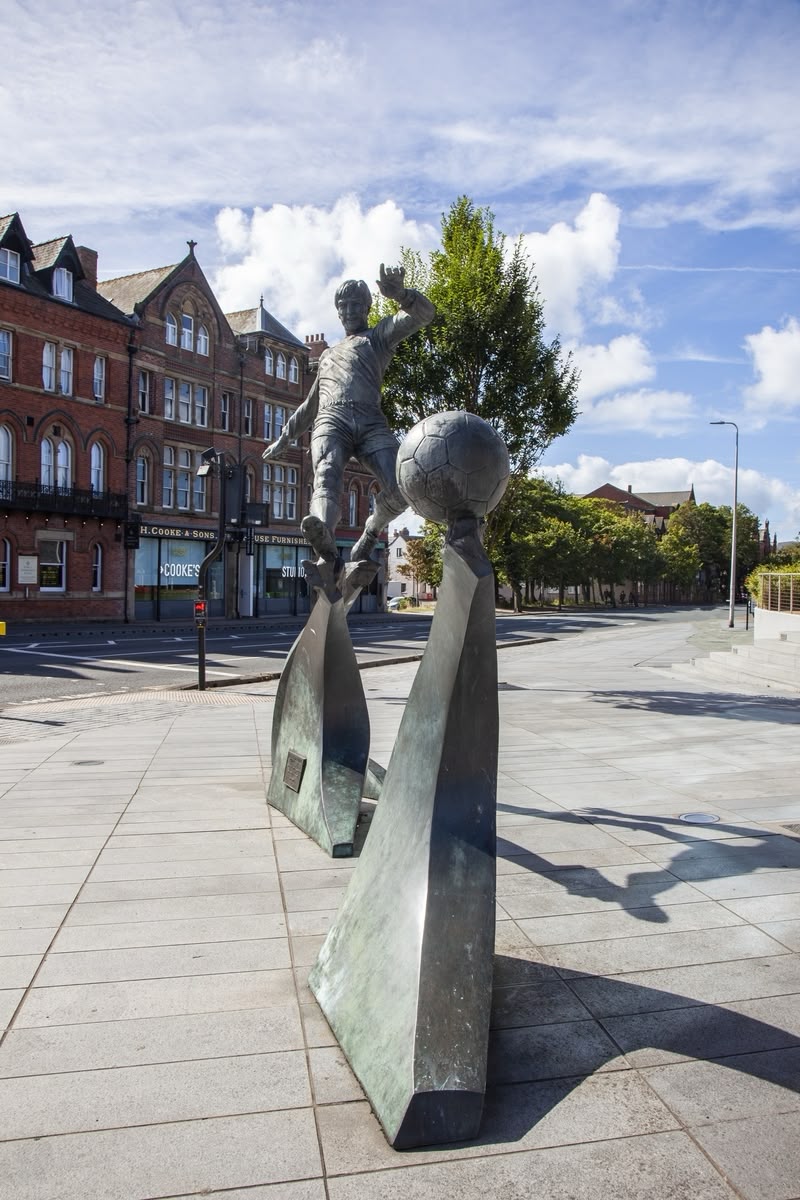
Other Points Of Interest: Barrow’s biggest claim to fame is the sprawling shipyard where Britain’s nuclear submarines are built behind very large fences for very obvious reasons. Oh and Emlyn Hughes, formerly of Liverpool or Question of Sport fame, was born there. Beyond that, the town sits on the doorstep of the Lake District National Park, meaning some of England’s finest scenery is less than an hour away. Closer to town, Piel Island offers a ruined castle and a pub with its own king, proving that Barrow can occasionally be stranger than fiction.
[No responsibility is taken for any inaccuracies. This page is entirely the product of bias and prejudice. ]